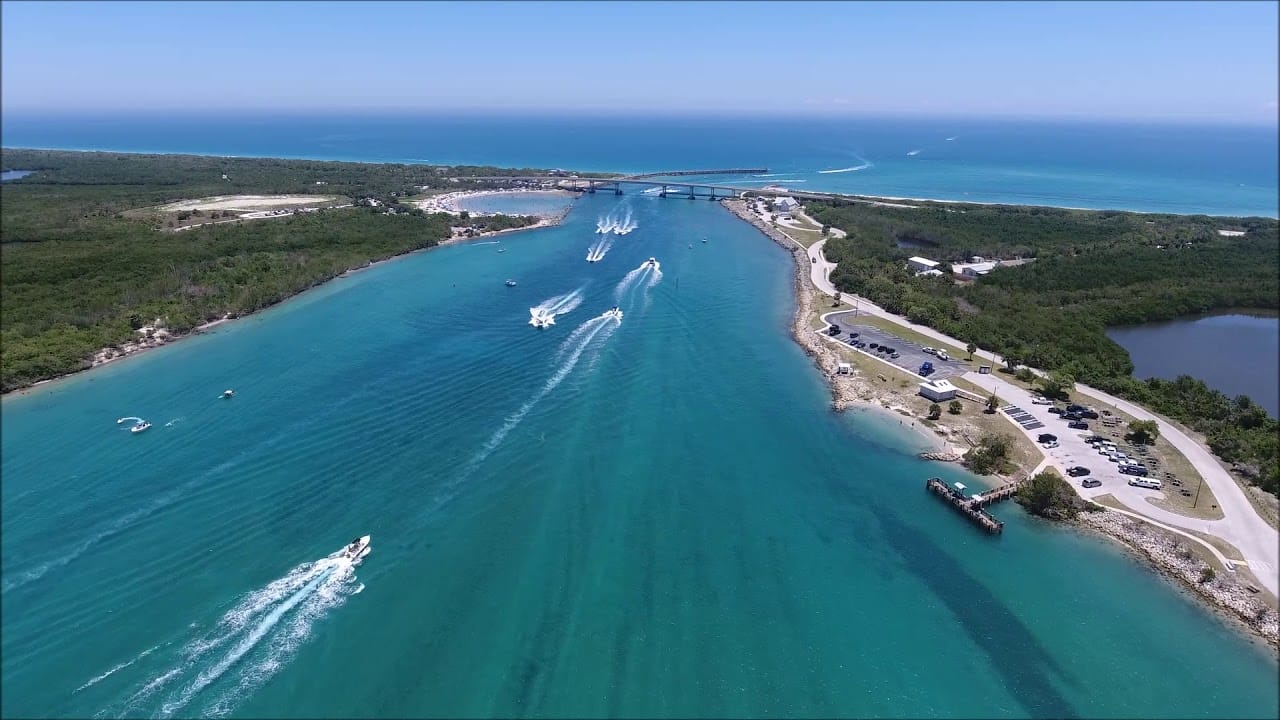
Sebastian Inlet State Park sits at the north tip of Orchid Island, where the Atlantic meets the Indian River Lagoon. Families come for well-known inlet fishing (snook and redfish off the north and south jetties), a calm cove on the lagoon side that suits young children, dependable surf breaks, and two small museums. From Vero Beach it's a short drive up A1A, making it an easy full-day or half-day trip.
There's a spot at the very north end of Orchid Island where the Atlantic Ocean pours in and out of the Indian River Lagoon twice a day, and the whole scene changes with it. One minute the inlet is a glassy pool, the next it's a moving river of green water with pelicans working the surface and a line of hopeful anglers along the rocks. That's Sebastian Inlet State Park, and after hosting families here for years, it's one of the first places we send guests who want a real Florida day that isn't a theme park.
This isn't a manicured resort beach. It's a working inlet with genuine fishing, honest surf, and a shallow cove that we've watched countless toddlers wade into for the first time. Below is how we'd plan the day if you were our own guests.
Where exactly is Sebastian Inlet, and how far is it from Vero Beach?
The park straddles the inlet at the northern boundary of Orchid Island — the same barrier island Vero Beach sits on. From most of Vero you simply point north on A1A and follow the coast until the road lifts you over the tall inlet bridge; the park entrances are on both the north and south sides of that bridge. If you want the full lay of the land before you go, our Orchid Island family guide covers the whole stretch of coast this park anchors. It's close enough that families staying at a home like Vero Oaks can pack a cooler in the morning, spend the day here, and be back for dinner without it feeling like a road trip.
Why is the inlet fishing so good — and can a family actually do it?
Inlets concentrate fish. Every tide funnels bait through a narrow channel, and predators line up to eat it. That's the simple reason Sebastian Inlet has a reputation up and down the coast, especially for snook and redfish. Anglers fish from the two long jetties that frame the channel and from a catwalk beneath the bridge, so you don't need a boat to have a real shot at a good fish.
For families, the honest version is this: the jetty rocks are uneven and can be slick, and the crowd fishes shoulder to shoulder when the bite is on. Little kids do better on the calmer lagoon side or the pier areas than out on the exposed tip. Older kids who can follow instructions and hold their footing often love it — there's always something happening.
- Snook — the marquee fish here; they hold in the moving water around the rocks and have their own protective regulations and seasons.
- Redfish — worked along the jetties and the lagoon flats nearby.
- Plus the supporting cast — Spanish mackerel, jacks, sheepshead, flounder and more move through with the tides and the season.
- A saltwater fishing license is required for most adults; check whether your situation is exempt before you cast.
If your family catches the fishing itch here and wants to level up to a guided trip elsewhere on the coast, our write-up on tarpon fishing in Boca Grande Pass walks through how to book a charter with kids aboard.
An inlet doesn't hand you the fish — it just puts them where a patient family has a real chance.
Is there safe, calm swimming for young kids?
Yes, and this is the part most first-timers don't know. On the lagoon side of the park, tucked behind the north jetty, there's a protected cove where the water is shallow and far calmer than the open ocean. It's shaded in spots, the bottom stays gentle, and on a rising tide it fills with clear water. We routinely point guests with toddlers and early swimmers to this cove rather than the surf beach.
A few honest cautions: this is still a natural inlet, and current picks up dramatically near the channel and the jetty tips. Keep small children well inside the cove and away from the moving water. Watch the tide — what's a calm wading pool at one hour can develop noticeable flow at another. And there is no substitute for an adult within arm's reach of a young child in any open water.
Is Sebastian Inlet good for surfing and bodyboarding?
It's one of the best-known surf spots on Florida's east coast. The jetty shapes the sandbars, and the break just north of it — long called First Peak — can produce clean, organized waves when a swell lines up. You'll see everyone from groms on soft-tops to seasoned locals out there on a good morning.
For a family, the move is to watch the water honestly. On a small, gentle day it's a fun place for older kids to bodyboard near the beach. On a bigger day the crowd gets competitive and the currents are strong, and that's a day to keep the little ones building sandcastles and let the experienced surfers have the peak. When lifeguards are on duty, ask them where the safest spot to be in the water is that day — they know the sandbars better than anyone.
What's the history here, and are the museums worth it?
This inlet has a genuinely interesting past, and it's told in two small, kid-sized museums inside the park. Near the south side, the McLarty Treasure Museum tells the story of the 1715 Spanish treasure fleet that was driven ashore along this coast by a hurricane — which is exactly why this region is nicknamed the Treasure Coast. On the north side, a fishing museum covers the local history of pioneer commercial fishing and the community that grew up around these waters.
Neither is a giant, all-day attraction, and that's the point — they're a perfect 30-to-45-minute break from sun and sand, especially in the heat of the afternoon. If your family enjoys this kind of layered coastal history, pair the visit with a slow drive down the Historic Jungle Trail on your way back toward Vero for a genuinely old-Florida afternoon.
How would you actually plan the day?
Here's the rhythm we suggest to guests. It works around the two things that matter most at an inlet: heat and tide.
- Arrive earlyish. Mornings are cooler, the light is beautiful, and the fishing and surf are often at their best before the wind builds.
- Start with whatever your family came for — get the anglers set on the calmer side, or get the surfers in while it's clean.
- Move the young kids to the protected cove for wading and shallow play; keep a close eye on the tide and stay well inside the calm water.
- Break for the air-conditioned museums during the hottest part of the afternoon.
- Pack a real cooler. Bring more water and shade than you think you need, plus reef-safe sunscreen, water shoes for the rocks, and a way to rinse sandy feet.
- Watch the sky. Summer afternoons here can bring fast-building storms, so be ready to move off the exposed jetty if weather rolls in.
Do that, and you've got a full, varied day — fishing, swimming, surfing, and a little history — without ever leaving one park.
| Who's in your group | Best spot in the park | Why |
|---|---|---|
| Toddlers / early swimmers | The protected lagoon cove | Shallow, calmer water away from the channel |
| Teens who want to fish | The jetty (with an adult) or catwalk | Where the moving water concentrates snook and redfish |
| Surfers / bodyboarders | The beach near First Peak, north of the jetty | The jetty shapes the sandbars and the break |
| Anyone, on a hot afternoon | The McLarty or fishing museum | Air-conditioned, kid-sized, genuinely interesting |
Sebastian Inlet with kids: quick answers before you go
Do you need a boat to fish at Sebastian Inlet?
No. Most family fishing here is done from shore — the north and south jetties and the catwalk under the bridge give you access to the deep, moving channel water where the fish concentrate. A boat opens up more of the lagoon and nearshore ocean, but plenty of good fish are caught from the rocks.
What fish is Sebastian Inlet known for?
Snook and redfish are the headline species and a big reason for the inlet's reputation, but you'll also find Spanish mackerel, sheepshead, flounder, jacks and more moving through with the tides and seasons. Snook in particular have their own protected seasons and rules, so check current FWC regulations before keeping anything.
Is there a safe place for young kids to swim?
Yes. On the lagoon side behind the north jetty there's a protected cove where the water is shallow and much calmer than the open ocean, which suits toddlers and early swimmers. Keep children well inside the cove and away from the channel and jetty tips, where current runs strong, and stay within arm's reach.
Do we need a fishing license?
Most adults fishing in Florida saltwater need a saltwater fishing license, though some situations are exempt. It's easy to sort out ahead of time through Florida Fish and Wildlife, so check your specific case before you cast rather than at the water's edge.
How far is Sebastian Inlet from Vero Beach?
It's a short drive north up A1A along the same barrier island Vero Beach sits on, ending at the tall bridge over the inlet at the north end of Orchid Island. For most families staying in the Vero area it's an easy half-day or full-day trip with no highway involved.
What should we pack for a family day here?
Bring more water and shade than you expect to need, plus reef-safe sunscreen, water shoes for the slick jetty rocks, snacks or a cooler, and a way to rinse sandy feet. Keep an eye on the afternoon sky in summer, since fast-building storms are common and you'll want to move off the exposed jetty if weather rolls in.

Travel DRD - Free Land Vacations — IATA certified, IATAN and ASTA members, hosting families since 2007. We manage every home in this collection ourselves.
Last updated: July 19, 2026